A rug can look clean from across the room and still carry an odor that becomes noticeable when the house is closed up, the air conditioner runs, or humidity rises. Understanding why rugs smell is the first step toward protecting a valuable floor covering rather than masking a problem that may be deep within its fibers, foundation, or fringe.
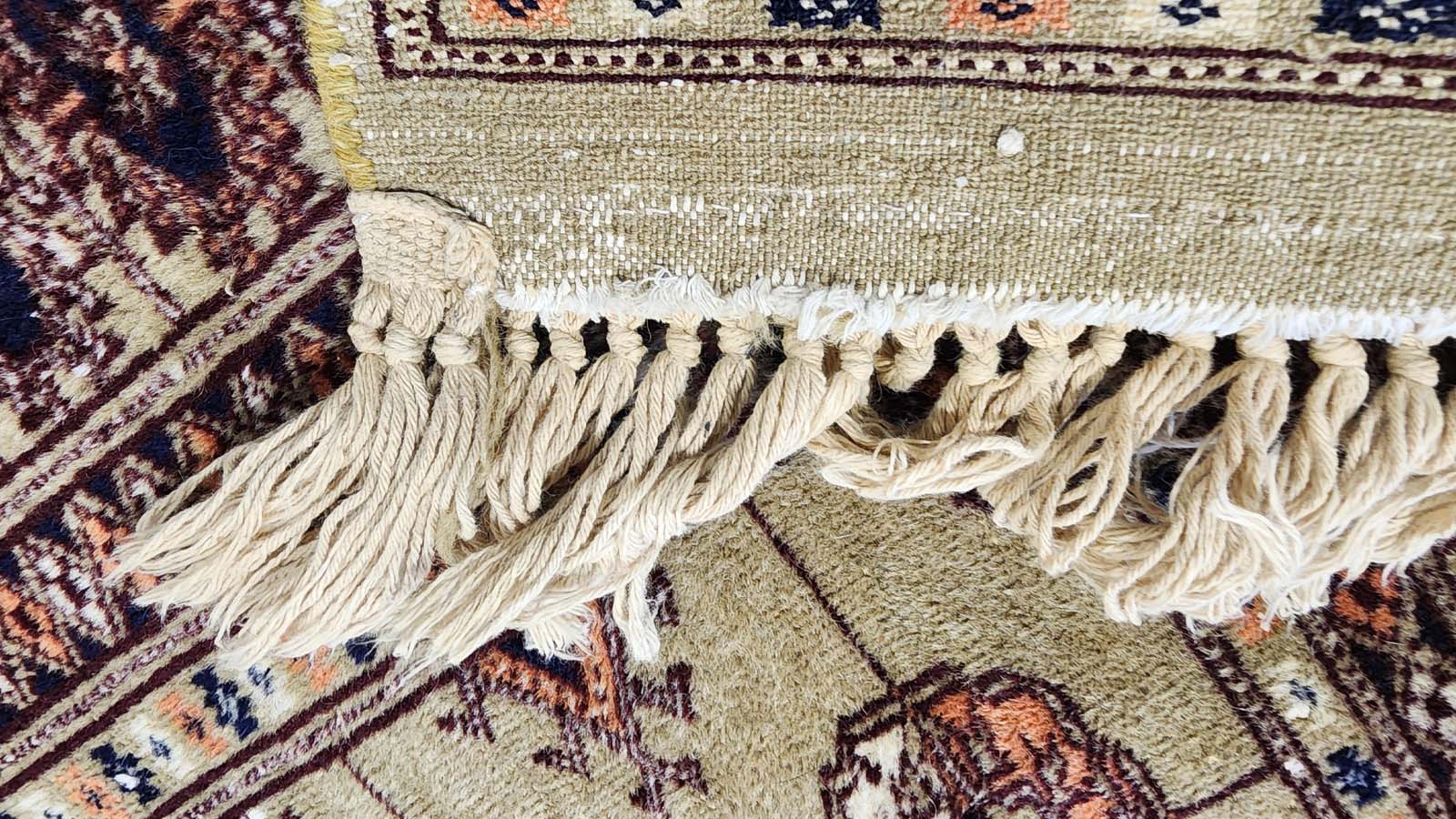
For handmade, antique, Persian, Oriental, wool, and silk rugs, odor is rarely just a surface concern. These rugs are layered textiles. Soil, moisture, organic residue, and airborne contaminants can settle below the pile, where ordinary vacuuming cannot reach. The correct response depends on the rug’s fibers, dyes, construction, age, and condition.
Why Rugs Smell After Everyday Use
The most common cause is accumulated dry soil. Fine dust, skin cells, cooking residue, and tracked-in debris work their way through the face fibers over time. In Las Vegas, desert dust is especially persistent. Its fine particles can settle deeply into a rug’s pile and foundation, carrying odors that become more apparent as the rug is walked on.
A rug may also absorb odors from its surroundings. Cooking aromas, fireplace smoke, tobacco, candles, and even a nearby garage can leave a lingering scent. Wool is particularly effective at holding airborne particles because of its natural fiber structure. That is one reason a wool rug can seem fresh for years, then suddenly smell stale when conditions change.
Odor does not necessarily mean a rug has been neglected. A well-loved family rug in a busy home can collect years of ordinary household soil. The difference is that a fine rug needs cleaning methods suited to its particular textile, not a generic approach designed for synthetic wall-to-wall carpet.
Moisture Can Explain Why Rugs Smell Musty
A musty or sour odor often points to moisture. This can come from a spill, pet accident, damp mopping nearby, plumbing issues, a wet shoe, or a rug that was previously cleaned without drying fully. Las Vegas is known for dry conditions, but summer monsoon weather, evaporative cooling, and indoor humidity can make an existing moisture issue easier to notice.
When moisture reaches a rug, it may travel past the visible pile and into the backing or foundation. If the rug is not thoroughly and appropriately dried, it can retain a damp odor. In some cases, microbial growth may develop beneath the surface. The longer moisture and residue remain in place, the more difficult odor removal can become.
This is also where well-intended home treatment can create a larger problem. Applying excessive water, shampoo, or deodorizing products may push residue deeper into the rug, disturb dyes, cause wool to felt or shrink, and leave moisture trapped in the foundation. A strong fragrance may cover the smell temporarily, but it does not remove the source.
Pet Odors Reach Beyond the Surface
Pet urine is one of the most challenging rug odor concerns because it can move well beyond the area that is visible. Urine may penetrate the pile, pass through the rug’s foundation, and reach the floor beneath it. As the residue dries and later absorbs humidity from the air, the odor can return.
Pet odor treatment is not one-size-fits-all. A colorfast synthetic rug may tolerate a different process than an antique wool rug with unstable vegetable dyes or a silk rug with a delicate pile. The rug’s construction matters as much as the stain itself. Fringe, cotton foundations, hand-knotted construction, and previous repairs all affect the safest treatment plan.
For a fresh accident, gently blotting with a clean white towel can limit spread. Beyond that immediate step, avoid saturating the rug or applying household products. Smith’s Fine Rug Cleaning can inspect the rug and determine whether odor has reached the foundation, whether dye testing is needed, and how to clean and dry the rug without compromising its materials.
Spills, Food, and Old Residue Can Leave Lasting Odors
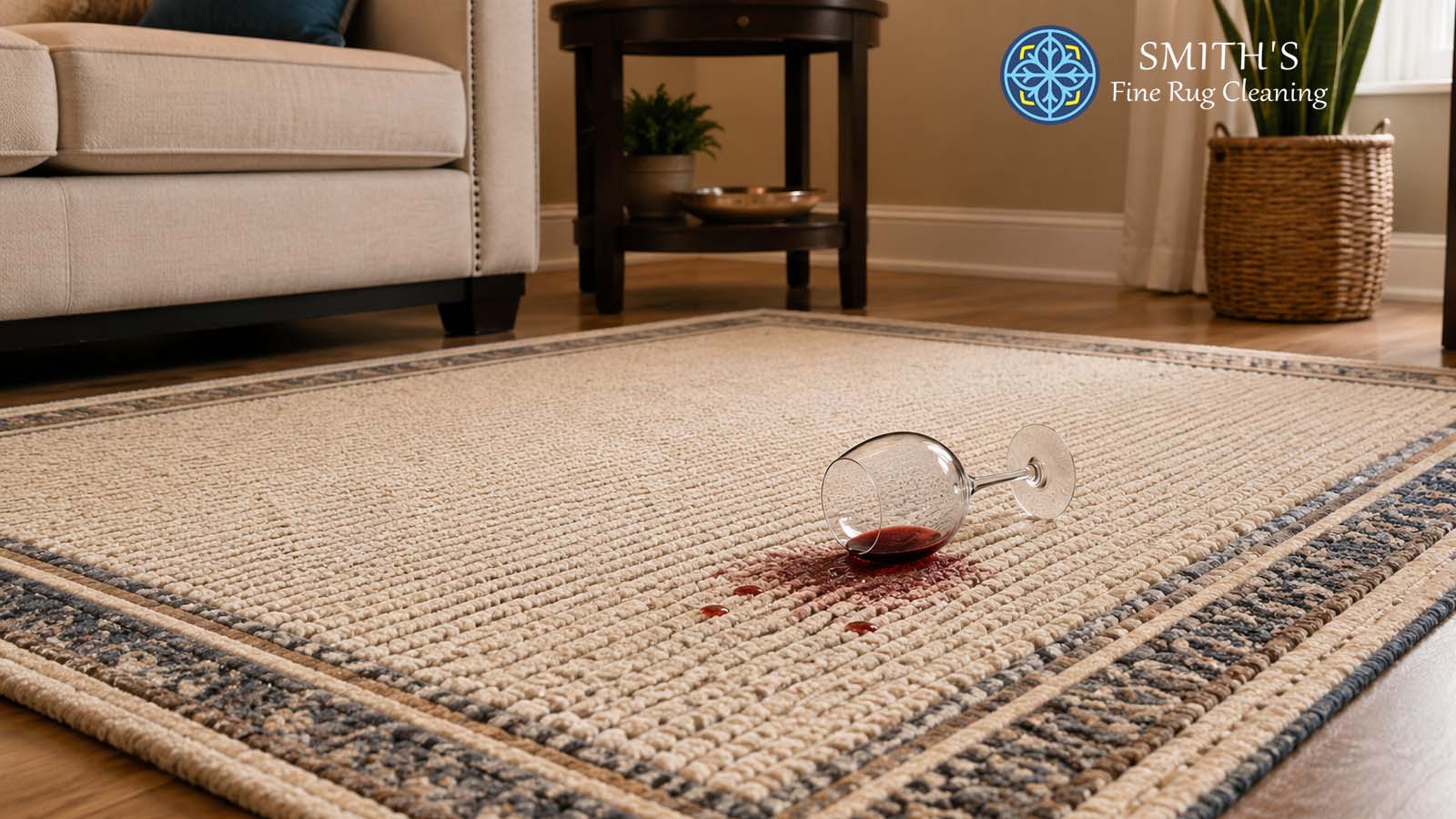
Milk, wine, juice, sauces, and other food spills can create odors long after the original mark has faded. Even when a spill seems dry, sugars, proteins, and oils may remain in the rug. These residues attract soil and can change as they age, particularly in warm rooms or under furniture where air circulation is limited.
Previous spot treatments can complicate the issue. Residue from a cleaning product may leave the rug feeling stiff, sticky, or prone to rapid resoiling. It may also interact unpredictably with natural dyes. On valuable rugs, the goal is not simply to make the affected area smell better. It is to remove embedded contamination while preserving the rug’s color, texture, foundation, and finish.
A professional evaluation is especially wise when an odor returns after a spill appears to have been addressed, when the smell is strongest near fringe or edges, or when there is any concern about color transfer. Those signs may indicate that the source is below the pile rather than on it.
Some Rug Odors Come From Age and Storage
Older rugs sometimes carry a distinctive scent from long-term storage, past water exposure, smoke, or decades of household use. A rug kept in a basement, attic, storage unit, or sealed plastic wrapping may develop a stale or musty odor even if there is no current spill.
Age alone does not make a rug uncleanable, but it does make thoughtful handling more important. Antique textiles may have weakened fibers, delicate dyes, areas of wear, or earlier repairs that require extra attention. The same is true of rugs brought home after an estate sale or inherited from a family member. Their history may be unknown, and an odor can be a useful signal that inspection is needed before the rug is placed in a living space.
Strong sunlight is another Las Vegas consideration. Sun can fade natural dyes and dry fibers over time, but placing a rug outside in direct sun is not a reliable answer to odor. It can create preservation concerns without addressing deeply embedded soil or residue.
What Professional Fine Rug Cleaning Does Differently
Effective odor removal begins with identifying the source, not selecting a perfume or a single cleaning formula. At Smith’s Fine Rug Cleaning, a rug should be assessed for fiber type, construction, dye stability, soil level, stains, odor location, and signs of prior moisture exposure before the cleaning approach is chosen.
Fine rug cleaning is a controlled textile-care process. Depending on the rug, it may include dry soil removal, careful washing appropriate to the fibers, thorough rinsing to remove suspended contaminants, specialized odor treatment, and controlled drying. The purpose is to clean through the rug where needed, not merely freshen the top of the pile.
That distinction matters for handmade rugs. Deeply embedded soil can abrade fibers with every footstep, while leftover moisture can threaten the rug’s foundation. Proper cleaning helps restore a fresher condition while supporting the long-term preservation of color, pile, fringe, and structural integrity.
When to Have a Smelly Rug Evaluated
A professional evaluation is appropriate when an odor persists after vacuuming, returns during humid weather, follows a pet accident or spill, or becomes stronger after the rug is moved. It is also prudent when a rug smells musty, has been stored for a long period, or has sentimental, financial, or collectible value.
Do not wait for the odor to become severe before seeking help. Early attention can reduce the chance that residues settle further into the textile or affect the floor beneath it. For rugs with delicate dyes and natural fibers, careful treatment is generally less risky and more effective than repeated attempts to manage the smell at home.
A fine rug is both a functional furnishing and a crafted textile with a history worth preserving. If yours has developed an odor, call Smith’s Fine Rug Cleaning at (702) 566-2144, text (702) 449-8662, or visit the shop at 2910 S. Highland Dr., Suite B, Las Vegas.