A rug can look clean long after a pet accident, yet a warm room, humid day, or returning pet can reveal the odor again. To remove pet urine smell from rug fibers effectively, the issue must be addressed below the surface – not simply covered at the pile. For handmade, antique, wool, silk, Oriental, and Persian rugs, that distinction matters. Urine can travel through the face fibers into the foundation, creating an odor concern that ordinary surface treatment cannot reliably resolve.
A fine rug is not interchangeable with wall-to-wall carpet. Its fibers, dyes, fringe, backing, and handwoven structure deserve treatment designed around the rug itself. Smith’s Fine Rug Cleaning approaches pet odor as a textile-care and preservation concern, with careful inspection and material-appropriate washing rather than a one-size-fits-all cleaning method.
Why Pet Urine Odor Returns
Pet urine contains compounds that can remain in a rug after the visible moisture has dried. As the affected area absorbs humidity or is warmed by sunlight, those residues can become noticeable again. In Las Vegas, strong sun and indoor temperature changes can make an odor seem to disappear, then return unexpectedly. Summer monsoon humidity can make the problem especially apparent.
The odor may be concentrated in a small area, but the full affected zone is often larger than the stain suggests. Liquid follows gravity and capillary action through yarns and into the rug’s foundation. On a rug lying over a pad or hard floor, urine may also reach the underside. Treating only the top fibers can leave the source behind.
Urine can also alter the feel and appearance of fibers. Wool may become stiff or discolored in an affected area. Natural dyes can be vulnerable when exposed to moisture or unsuitable cleaning agents. Silk requires even greater caution because its fine, lustrous fibers can be permanently affected by improper moisture, agitation, or chemistry.
What Makes Fine Rugs Different
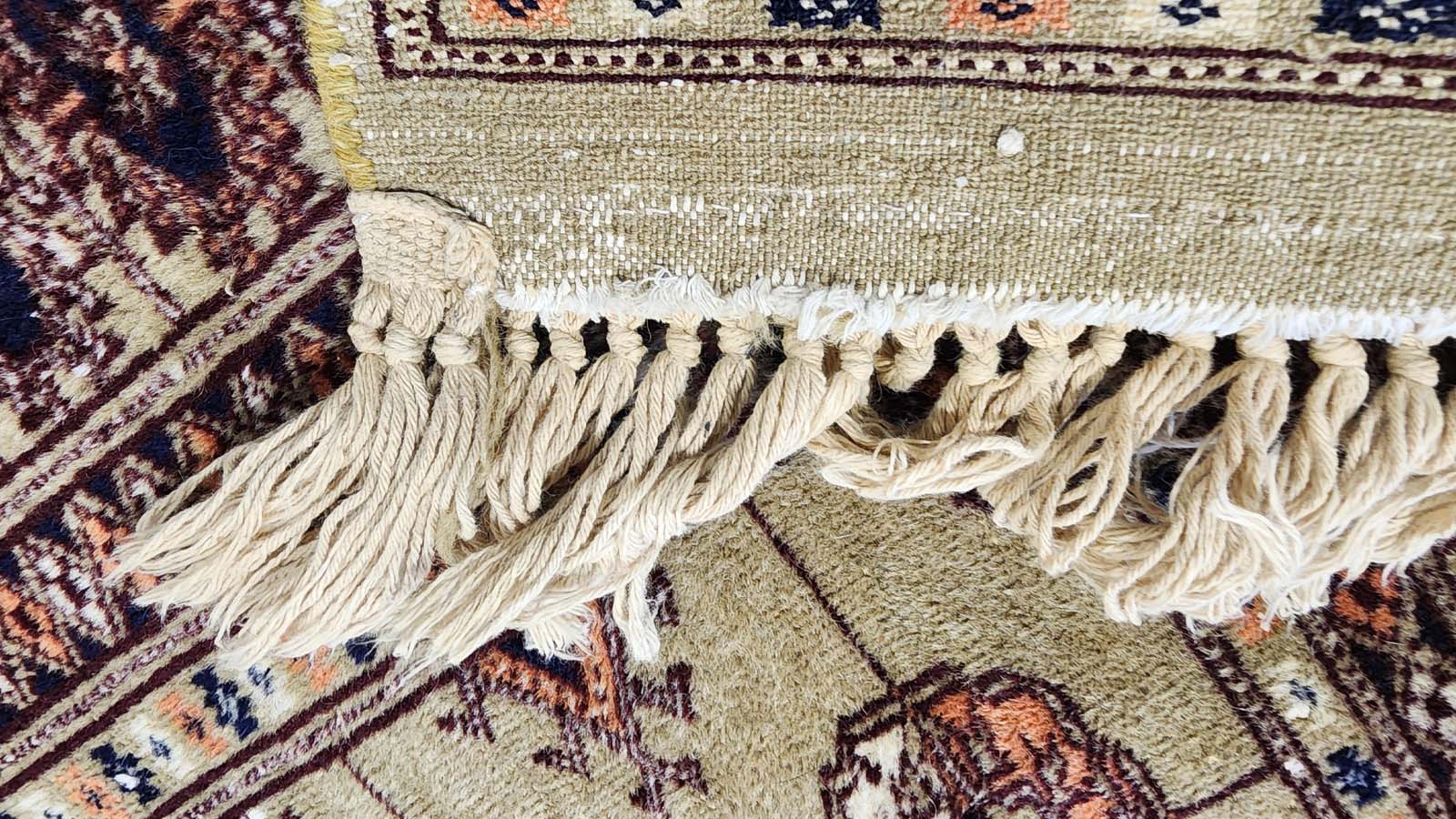
Many premium rugs are built in layers. The decorative pile is only the visible portion; beneath it is a foundation of cotton, wool, silk, or another material that gives the rug its structure. Pet urine can penetrate those layers, where it remains difficult to reach and rinse without a controlled cleaning process.
That construction creates a real trade-off. A homeowner understandably wants the odor gone quickly, but aggressive treatment can create a larger and more costly problem: dye bleeding, browning, fiber distortion, shrinkage, weakened foundations, damaged fringe, mildew, or lingering moisture trapped deep inside the rug. Hard water can add another complication in the Las Vegas area, leaving mineral residue when a rug is overwet or rinsed inadequately.
The age and origin of a rug matter as well. An antique Persian rug with naturally dyed wool needs a different assessment from a contemporary machine-made rug. A silk accent rug, a hand-knotted Oriental runner, and a sentimental family heirloom should never be assumed to respond the same way. Professional care begins with identifying what the rug is made of and how it was constructed.
What to Do When an Accident Happens
The safest immediate response is restraint. If the area is still wet, gently blot it with a clean white towel to absorb surface moisture. Avoid rubbing, which can push contamination deeper into the yarns and distort the pile. Keep pets away from the area until it can be evaluated, since repeat marking can deepen the odor issue.
Beyond that, avoid turning a valuable rug into a cleaning experiment. Household products may leave residue, change a rug’s pH, or interact poorly with dyes and natural fibers. Excess water is equally risky. A rug may feel dry at the surface while its foundation remains damp, creating conditions that encourage odor, mildew, or structural stress.
Do not rely on fragrance to judge the result. A scented product may temporarily mask an odor, but it does not confirm that urine residues have been removed. When the fragrance fades or the room becomes humid, the underlying problem can return.
How Professionals Remove Pet Urine Smell From a Rug
Professional rug odor treatment starts with inspection. A trained cleaner evaluates the rug’s fiber type, construction, dyes, condition, soiling level, and the likely extent of urine penetration. This evaluation guides every decision that follows, from the cleaning solution and wash method to the amount of moisture and drying time the rug can safely tolerate.
At Smith’s Fine Rug Cleaning, the goal is not merely to make a rug smell better at pickup. The process is designed to address embedded contaminants while protecting the rug’s color, texture, foundation, and fringe. Dye testing is particularly important for handmade and older rugs, where color stability cannot be assumed.
A proper professional wash can remove deep dry soil as well as urine-related residues. That soil removal matters because desert dust, tracked-in grit, and pet dander can settle into the same areas and dull the rug’s appearance. Washing is followed by thorough rinsing so cleaning residues and dissolved contaminants are not left in the fibers. Controlled drying helps prevent the moisture-related problems that occur when a fine rug is cleaned without the right equipment or environment.
In some cases, odor removal requires more than one treatment or a longer dwell period. That is not a sign that the rug has been handled poorly. It reflects the reality that repeated accidents, old deposits, dense pile, and deep foundation penetration can require additional care. A trustworthy specialist will set reasonable expectations based on the rug’s actual condition rather than promising a universal result before inspecting it.
When the Rug Pad and Surrounding Area Matter
If a pet accident has reached through the rug, the rug itself may not be the only item that needs attention. The pad beneath it can hold odor, particularly if it is absorbent. The floor below may also need evaluation, depending on the amount of moisture and the flooring material.
This is one reason a rug may smell fresh after cleaning but develop an odor again once it is returned to the same location. The cleaned textile has been restored, while a contaminated pad or underlying surface continues to contribute odor. Identifying the full source protects the investment made in cleaning and helps discourage pets from returning to the same area.
Protecting a Rug After Professional Cleaning
After a rug has been professionally cleaned, prompt attention to future accidents remains the best protection. Address fresh moisture by blotting, not scrubbing, and arrange professional care before residues have time to set. Regular fine-rug cleaning also helps remove the dry soil that naturally accumulates in Las Vegas homes, especially near entryways and in rooms where doors open frequently.
Placement can make a difference, too. Avoid prolonged direct sun when possible, as intense sunlight can affect color over time. Use an appropriate pad to support the rug and reduce slipping, while remembering that a pad should be inspected if an accident reaches it. For homes with pets, routine inspection of favorite sleeping areas, corners, and repeated marking locations can prevent a small issue from becoming a deep odor problem.
A cherished rug should not have to be replaced because of one accident or endure damage from an unsuitable cleaning attempt. With the right evaluation and controlled washing process, many rugs can be refreshed while their craftsmanship and character are respected.
For careful assessment of pet odor, stains, and deep soil in a fine rug, contact Smith’s Fine Rug Cleaning. Call (702) 566-2144, text (702) 449-8662, or visit the shop at 2910 S. Highland Dr., Suite B, Las Vegas.